
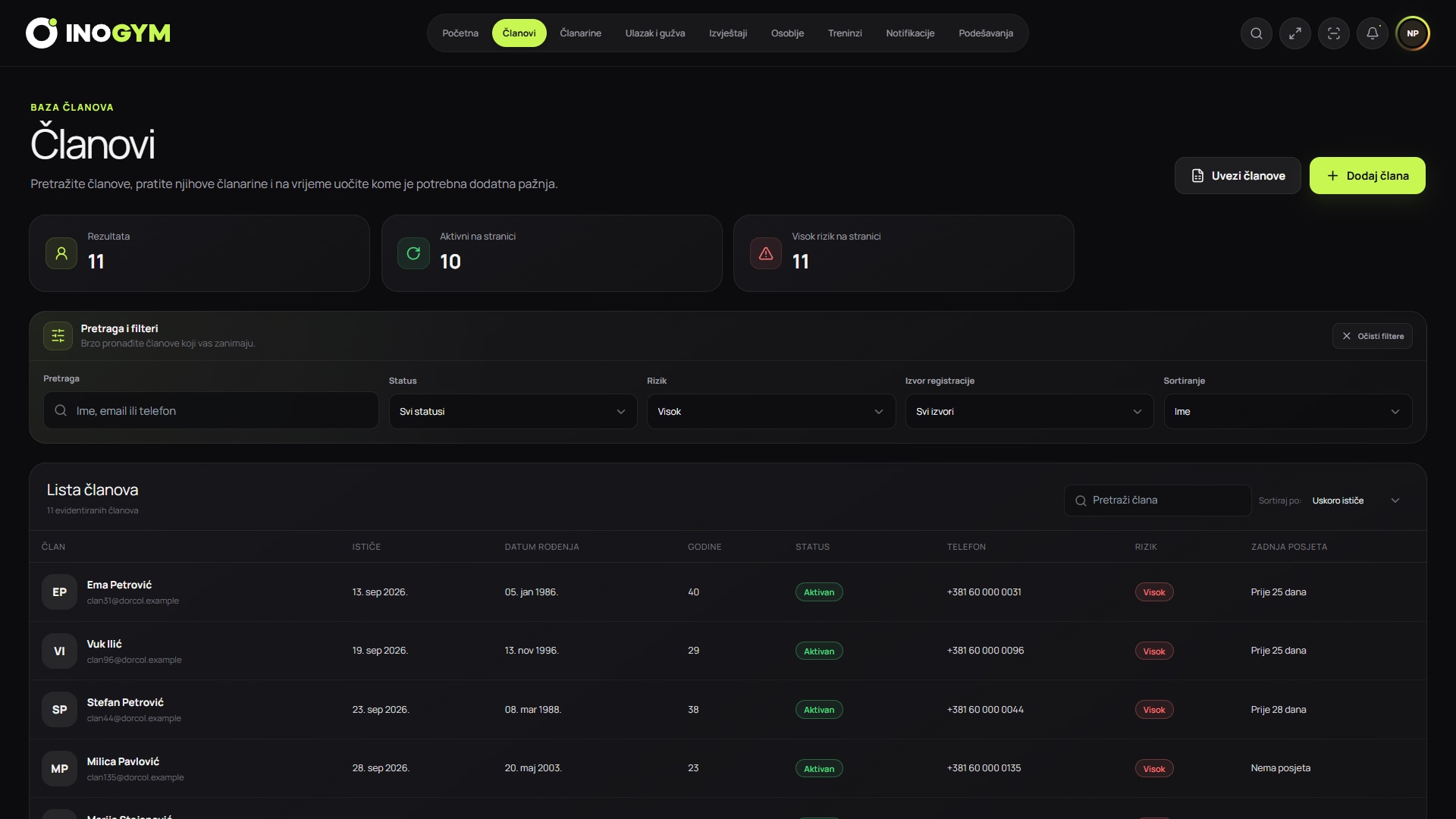
Screenshots show the Serbian version of the app.
Define churn first
A member absent for seven days has not necessarily left. Travel, illness or a different training plan may explain it. Define when monitoring starts, such as a drop from usual frequency, extended inactivity or expiry without renewal.
Use the same definition across reports. If reception, the owner and marketing use different criteria, month-to-month comparisons are unreliable.
Signals worth tracking
The most useful signal is a change from the member's own pattern, rather than comparing everyone with one average.
| Signal | What it may mean | Reasonable action |
|---|---|---|
| Fewer visits | A change in routine or motivation | Gently check whether help is needed |
| Membership expires soon | The member may not have decided on renewal | Send a clear notice of the date and options |
| Expiry without renewal | Financial, time or experience-related reasons | Record the reason if the member volunteers it |
| Failed entry | Expiry, wrong plan or a technical issue | Resolve the issue before sending a sales message |
Create a simple intervention workflow
Use three levels: an information notice, personal contact from reception and an offer of a conversation or tailored plan. Give each level a task owner, deadline and recorded outcome.
Tailor the message. A member whose plan expired needs renewal information; someone with a valid membership may benefit more from a question about class times, crowding or their programme.
Measuring whether the approach works
Alongside churn rate, track return within 7 or 30 days, membership renewal, responses and commonly volunteered reasons. Compare only the same periods and definitions of an active member.
Subscription models need an explicit definition of active and churned members before calculation. Stripe documentation illustrates why a metric's definition must be clear before calculating its rate.
- number of members in the at-risk group
- share of members successfully contacted
- return after contact
- renewals and reasons for not renewing
Limits of automation
A model or rule can suggest priorities, but staff should assess context. Avoid sensitive assumptions or pressure, and make opting out of promotional messages easy.
The goal is better service and timely help. Frequent unwanted contact may achieve a short-term return at the cost of long-term trust.